|
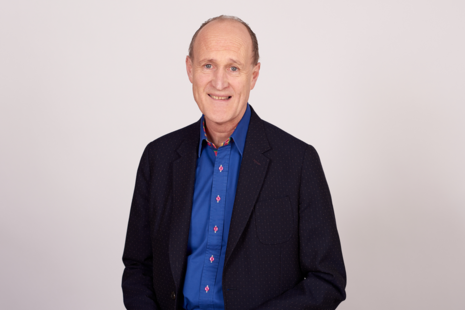
Ed Balls was appointed Secretary of State for Children, Schools and Families on 28 June 2007. His principal focus is to ensure that every child gets the best possible start in life, that they are safe and healthy, that they secure the highest standards of achievements, that they enjoy their childhood and that they can make a positive contribution to society free from the effects of poverty.
Ed Balls was previously Economic Secretary to the Treasury, taking up appointment on 5 May 2006. He has been the Member of Parliament for Normanton since 2005. He was born in 1967 and educated at Nottingham High School; Keble College, Oxford; and the John F Kennedy School of Government, Harvard.
Ed Balls was a teaching fellow in the Department of Economics, Harvard, 1989–90, and an economics leader writer and columnist for the Financial Times, 1990–94. He was economic adviser to the then shadow chancellor, Rt Hon Gordon Brown MP, 1994–97; secretary of the Labour Party Economic Policy Commission, 1994–97; economic adviser to the chancellor of the exchequer, 1997–99; chief economic adviser to HM Treasury, 1999–2004; and a research fellow at the Smith Institute, 2004–05.
Ed Balls has had a number of publications including Towards a New Regional Policy and Reforming Britain’s Economic and Financial Policy: Towards Greater Economic Stability and Microeconomic Reform in Britain: Delivering Opportunities for All. He is a member of the TGWU, Unison and the Co-operative Party.
Ed Balls is married to Yvette Cooper MP and has three children. Outside work his interests include music, cooking and playing football with his children.
[TOP]
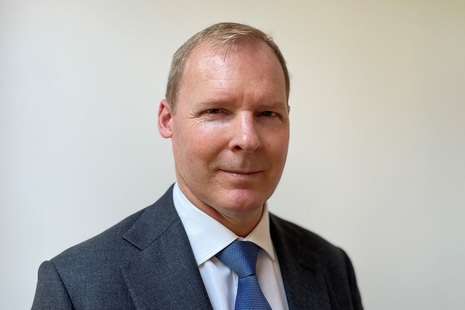
Vernon Coaker’s principal policy areas are raising school standards, including public examinations and national tests, the National Curriculum, 14-19 education and Diplomas; school funding and capital, including Building Schools for the Future; and schools workforce issues.
Vernon Coaker was appointed Minister of State for Policing, Security and Crime in October 2008. Before taking up his post at the Home Office, he was a Government whip.
Previously, Vernon Coaker was the under-secretary of state in the Home Office. Before this he held the position of Government whip, parliamentary private secretary to Tessa Jowell, Secretary of State in the Department of Culture, Media and Sport, and was also parliamentary private secretary to Estelle Morris when she was secretary of state for education.
Vernon Coaker has been MP for Gedling in Nottinghamshire since 1997.
Before becoming an MP, he was deputy headteacher at Bigwood School in Nottingham.
[TOP]

Dawn Primarolo’s principal policy areas include leading the cross-Government agenda for children's well-being, safety, protection and care; family policy, including parenting support; teenage pregnancy strategy; Sure Start, childcare and early education; the Every Child Matters agenda; and extended schools.
Dawn Primarolo joined the Department from the Department of Health, where she was the minister of state for public health.
Before her appointment at the Department of Health, Dawn Primarolo spent ten years at the Treasury; first as financial secretary (1997–1999) and subsequently as paymaster general, responsible for oversight of taxation as a whole.
Born in London in 1954, Dawn Primarolo spent most of her childhood in Crawley, Sussex. She was educated at Thomas Bennett Comprehensive in Crawley, Bristol Polytechnic and Bristol University, where she gained a BA (Hons) degree in social science and conducted PhD research into women and housing.
Dawn Primarolo has lived in Bristol since the late 1970s, and after a period as a member of Avon County Council, she was elected Member of Parliament for Bristol South in 1987.
[TOP]
Diana Johnson’s principal policy areas include admissions, the National Curriculum and special educational needs (SEN).
Previously, she has held positions as an assistant whip in Government. She was the parliamentary private secretary to the Rt Hon Steven Timms MP (2005–2007).
Diana Johnson gained an LLB in Law at Brunel University. She became a barrister in 1991. She has previously worked in community law centres, a civil service trade union and as a local authority councillor. In 2003 she became a London-wide Assembly member on the Greater London Authority.
Diana Johnson was born in 1966 and brought up in the North West of England. She lives in her constituency with her partner and is a season ticket holder for Hull City.
Diana Johnson was selected as the Labour candidate for Kingston upon Hull in 2004. She was elected as the first female MP for Hull North in the general election of 2005.
[TOP]
Delyth Morgan’s principal policy areas include safeguarding and child protection, drugs and alcohol, sport and healthy eating.
Delyth Morgan joined the Department from the Department for Innovation, Universities and Skills, where she was parliamentary under-secretary of state for intellectual property and quality.
Born in London on 30 August 1961, Baroness Morgan was educated at Elliot Comprehensive, London, and then at Putney College of Further Education. She went on to study for a BSc in physiology at Bedford College and University College London, and was president of the London University Union (1985–86).
Delyth Morgan became a peer in 2004 while she was chief executive of Breakthrough Breast Cancer (1996–2005) and before that she was director of communications for the National Asthma Campaign (1992–96). Before this, she held the post of director of the Workplace Nurseries Campaign (1988–92) and was campaigns organiser at Shelter (1986–88).
Other positions she has held include chair of the Childcare Umbrella (1989–92) and member of the Cancer Task Force (2000–05) and the NHS Modernisation Board (2002–05).
Outside politics, Baroness Morgan enjoys walking and listening to music, and has just passed her one star kayak course.
Baroness Morgan is married to Jim Shepherd and they have one daughter. She divides her time between West Wales and north London.
[TOP]
Iain Wright’s principal policy areas cover Apprenticeships, 14-19 qualifications strategy, 16-19 funding, work-based learning, young people not in education, employment or training (NEET), the Young People’s Learning Agency (YPLA) and the Qualifications and Curriculum Authority (QCA).
Iain Wright joined the Department from the Department for Communities and Local Government, where he had been a parliamentary under-secretary of state since June 2007.
Iain Wright entered Parliament after being elected in a by-election in September 2004 as the MP for Hartlepool. Since entering Parliament he has been a member of the Public Accounts and Modernisation Standing Committee (2007), and parliamentary private secretary to a health minister (2005–06).
Iain Wright is a chartered accountant, and before becoming an MP he worked as an accountant at OneNorthEast (a regional development agency), and at Deloitte & Touche. He studied for a BA and MA in history at University College London.
Iain Wright has been married to his wife Tiffiny since 1995. They have three sons and a daughter.
Born in Hartlepool in 1972, Iain enjoys spending time with his family, history, listening to music, and watching football in his spare time. He is an avid supporter and season ticket holder of his local football team, Hartlepool United.
[TOP]